Biggest Aura Studio 3 Buying Mistakes (And How to Avoid Them)
Introduction
The Aura Studio 3 is a visually striking, design-forward wireless speaker often bought for its 360-degree aesthetic and room-filling sound. Shoppers gravitate toward it for living rooms, dining areas, and as a centerpiece that blends audio with décor. Yet, despite its appeal, buyers make predictable mistakes that lead to disappointment: mismatched expectations about sound, misunderstood connectivity limits, and placement errors that blunt its performance. This article examines those common missteps, provides an objective analysis of the Aura Studio 3, and offers practical guidance so readers can choose confidently and avoid buyer’s remorse.
Product review and detailed analysis
What the Aura Studio 3 tries to be
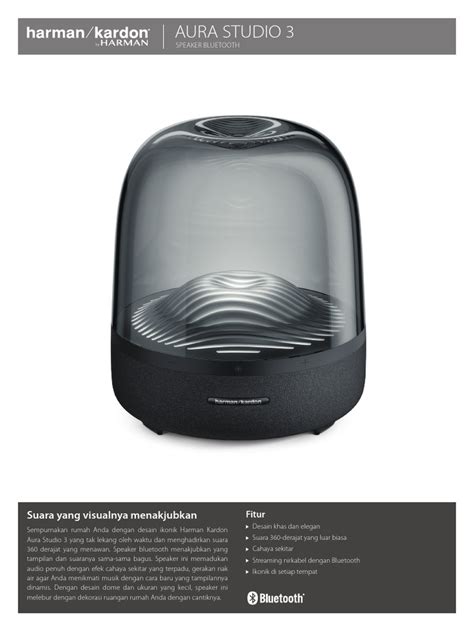
The Aura Studio 3 positions itself as a lifestyle speaker: an eye-catching object that also delivers immersive sound. Its signature dome design and ambient light ring make it a decorative piece as much as an audio device. The product is aimed at buyers who want more than a plain box speaker—people who value form and background music as much as sonic performance.
Design and build
Design-conscious buyers will appreciate the Aura Studio 3’s sculptural approach. The speaker typically features a translucent dome, a circular driver layout intended to disperse sound widely, and integrated ambient lighting. The build quality tends to be solid, with materials that emphasize style. Because it’s meant to be seen, buyers often place it in shared living spaces rather than tucked away—this affects how it performs in real rooms.
Sound characteristics
In practice, the Aura Studio 3 aims for a warm, engaging sound profile that favors fullness and midrange-rich presentation. For casual listening—jazz, acoustic playlists, podcasts, and ambient background music—it often performs very well. The speaker’s design creates a sense of sound radiating into a room, which many listeners find appealing.
However, the sound profile is not intended to satisfy audiophile-level scrutiny. Critical listeners may note limitations in stereo imaging (the product is effectively a single housing with omnidirectional dispersion), dynamic headroom, and precision in the very deepest bass. For those who want tight, punchy low- end for bass-heavy genres at loud listening levels, a separate subwoofer or a different class of speaker may be preferable.
Connectivity and features
The Aura Studio 3 typically offers wireless connectivity for easy streaming and may include a wired input for legacy devices. It is primarily designed for Bluetooth streaming and simple set-up rather than complex multiroom ecosystems. Buyers should verify whether the specific model supports the wireless standards and codecs they expect; assumptions about smart features or voice assistant integration can lead to frustration if the chosen unit lacks them.
Real-world performance
Use case testing shows the speaker excels as a centerpiece for everyday listening. For dinner parties, casual gatherings, or as an ambient music source while working from home, it delivers satisfying, room-filling sound. In smaller rooms or open-plan living areas, it provides even coverage. Where it struggles is in demanding scenarios: close-up near-field critical listening, high-SPL dance parties where bass extension and transient control matter, or as a low-latency source for gaming and TV without additional equipment.
Set-up and placement considerations
Because the Aura Studio 3 is omnidirectional, placement influences perceived bass and clarity. Placing it in a corner will exaggerate bass; centering it on a table or shelf yields more balanced midrange. It is heavy on visual presence, so buyers often keep it on display, but doing so near reflective surfaces or behind obstructions can color the sound. The ideal placement is a free-standing spot in the listening area, elevated slightly and away from walls if aiming for accuracy; closer to a wall if more bass warmth is desired.
Common buyer mistakes — and how to avoid them
Mistake 1: Expecting true stereo separation
Many buyers assume a visually large speaker equals stereo imaging comparable to a two-speaker stereo pair. The Aura Studio 3 is designed to radiate sound in all directions from a single enclosure; it creates a spacious soundstage for room listening but does not replace two discrete speakers placed left and right for precise imaging.
How to avoid: If stereo imaging is important—placing instruments across a stage, pinpointing singer location—compare the Aura Studio 3 against a proper stereo setup. Consider buying two bookshelf speakers or a stereo soundbar for TV. For ambient, room-filling music, the Aura Studio 3 will meet expectations.
Looking for the best Audio & Headphones deals on Amazon?
Browse Now →Mistake 2: Assuming full smart-home functionality
Some shoppers expect built-in voice assistants or deep smart-home integration out of the box. Not all versions include voice assistants or Wi‑Fi multiroom protocols; many prioritize Bluetooth simplicity.
How to avoid: Check the feature list before purchasing. If hands-free voice control or integration with an existing multiroom ecosystem is a priority, choose a speaker explicitly marketed with those features or plan to pair the Aura Studio 3 with a voice-enabled hub.
Mistake 3: Buying without matching to room size and use
Because of its dramatic design, buyers sometimes select the Aura Studio 3 for large outdoor gatherings or very large rooms and then find its output insufficient at high volumes.
How to avoid: Consider room size and listening levels. For outdoor use, look for battery-powered portable speakers or dedicated PA-style systems. For very large rooms and parties, a speaker with more power or an additional subwoofer will deliver the desired impact.
Mistake 4: Ignoring placement and furniture interactions
Placement near large reflective surfaces, inside cabinets, or tucked behind décor can muffle or over-emphasize parts of the frequency range.
How to avoid: Test placement before committing. Move the speaker to different parts of the room, listen to familiar tracks, and use a return window or retailer that allows in-home auditioning so the purchaser can confirm the sound in the intended environment.
Mistake 5: Overlooking latency requirements for TV and gaming
Bluetooth speakers often introduce audible delay compared with wired or low-latency wireless solutions. Buyers who plan to use the Aura Studio 3 with TV, movies, or games may notice lip-sync issues.
How to avoid: For TV and gaming applications, prefer a wired connection if possible, a transmitter/receiver that supports low-latency codecs, or a dedicated soundbar that matches the TV’s latency expectations.
Pros & Cons
- Pros
- Striking, design-led aesthetic that doubles as decor
- Warm, room-filling sound ideal for background music
- Easy to use for casual listening and social situations
- Typically solid build quality and attention to finish
- Cons
- Not a substitute for a true stereo pair for critical listening
- Limited low-frequency precision at high volumes compared with systems that include a separate subwoofer
- Potential lack of advanced smart features or multiroom support depending on model
- Bluetooth latency can make TV/gaming use problematic without additional gear
How the Aura Studio 3 compares to alternatives
A comparison helps clarify where the Aura Studio 3 fits in the market. The table below outlines high-level differences against typical alternatives: a compact smart speaker aimed at voice and multiroom use, a retro-styled high-power bookshelf competitor, and a soundbar commonly used for TV.
| Model | Design focus | Sound profile | Connectivity | Best for |
|---|---|---|---|---|
| Aura Studio 3 | Decorative, omnidirectional design | Warm, room-filling midrange with pleasant bass | Wireless streaming (Bluetooth), wired input on some models | Living room centerpiece, ambient music, casual listening |
| Compact Smart Speaker (e.g., Sonos One class) | Compact, process-oriented (voice + multiroom) | Neutral, balanced to fit diverse genres | Wi‑Fi, voice assistants, multiroom | Smart-home integration, multiroom systems, voice control |
| Powered Bookshelf/Retro (e.g., Marshall Stanmore class) | Retro/statement with emphasis on power | Powerful, punchy with strong low end | Bluetooth, aux, sometimes optical | Desktop/room listening with a focus on rock and bass |
| Soundbar (TV-first) | Long, narrow form factor for below-TV mounting | Centrally focused clarity, designed for dialogue | Optical/HDMI ARC, Bluetooth on some models | TV, movies, and gaming with low-latency needs |
Buying guide: What to check before purchasing
1. Clarify the primary use case
Determine whether the speaker will serve mainly as a decorative background music source, a main living-room speaker, or part of a multiroom and smart-home setup. The Aura Studio 3 is ideal for ambient listening and design-first living spaces; if the priority is voice assistant control or multiroom playback, other speakers may be more suitable.
Shop the latest Audio & Headphones picks on Amazon.
See Deals →2. Confirm connectivity needs
Check the supported connection types. If the buyer plans to stream from a phone, Bluetooth alone may suffice. If integration with a home Wi‑Fi network, voice assistants, or lossless streaming is needed, ensure the chosen model supports those features or plan to add a bridge device.
3. Consider room size and placement
Match speaker power and dispersion to room dimensions. For small to medium rooms, the Aura Studio 3 can provide satisfying coverage. For large open-plan areas or outdoor use, plan for supplemental speakers or a different system designed for those conditions.
4. Evaluate latency for AV use
If the speaker will be used with TV or games, check latency characteristics or a wired input. Bluetooth can introduce lip-sync problems; minimizing delay often requires wired connections or devices that specifically advertise low-latency modes.
5. Read reviews and listen where possible
Objective reviews highlight how joyfully a speaker performs across genres, while hands-on listening reveals room-dependent behavior. Try to audition with familiar tracks and check a retailer’s return policy if in-home trials are allowed.
6. Check the warranty and update policy
Speakers are long-term purchases; confirm warranty length and manufacturer support. A product that receives firmware updates can gain features and bug fixes over time, which is a practical advantage.
7. Factor in accessory and placement costs
Consider stands, wall mounts, or cables that may be necessary to achieve the desired setup. Because the Aura Studio 3 is often displayed, providing an appropriate pedestal or surface can impact both looks and sound.
Practical checklist before purchase
- Know whether stereo imaging or omnidirectional sound is needed.
- Verify the exact connectivity options of the unit being purchased.
- Decide if low-latency AV performance is required for TV/gaming.
- Test placement options in the intended room or confirm a flexible return window.
- Assess whether a separate subwoofer will be necessary for desired bass impact.
- Confirm warranty terms and firmware update practices.
Conclusion
The Aura Studio 3 is compelling for buyers who want a beautifully designed speaker that fills a room with warm, engaging sound. When expectations are aligned—casual listening, decorative presence, and social settings—it performs admirably. The common mistakes arise when buyers assume it will replace a stereo pair, act as a multiroom smart hub, excel for demanding bass-heavy playback at high volumes, or serve as a low-latency solution for TV and gaming without additional gear.
By clarifying use cases, verifying connectivity and latency, auditioning the speaker in the intended space, and considering whether a secondary subwoofer or a different product class is necessary, prospective buyers can avoid disappointment. With correct placement and realistic expectations, the Aura Studio 3 can be a satisfying and stylish addition to many homes—just not the one-size-fits-all solution for every audio need.