Blind Test: Beelink Me Mini Nas Mini Pc vs Contour Design Unimouse - Which is Actually Better?
Positioning two very different products—one a compact mini PC with NAS capabilities and the other a purpose-built ergonomic mouse—into a single blind test might seem unconventional. Yet buyers often face a similar mental trade-off: invest in a small, quiet computing hub that frees up space and centralizes storage, or invest in an input device that reduces fatigue and improves precision for the person using that hub. This article compares the Beelink Me Mini NAS Mini PC and the Contour Design Unimouse across practical, real-world criteria to answer the core question: which is actually better for typical buyers and use cases?
Introduction to the contenders
Beelink Me Mini NAS Mini PC
The Beelink Me Mini NAS Mini PC blends the compact footprint of modern mini PCs with features commonly associated with home NAS systems. It aims to serve as a space-saving desktop replacement, light server, or home media hub—delivering low-power compute alongside local storage options and network connectivity. Buyers attracted to this category usually prioritize quiet operation, energy efficiency, and the ability to host files, backups, or small services without a full-size tower.
Contour Design Unimouse
The Contour Design Unimouse is an ergonomic pointing device that focuses on adjustability and long-session comfort. Designed to reduce ulnar deviation and wrist strain, it offers multiple axes of adjustment—angle, thumb rest position, and occasionally programmable buttons—so each user can tune the shape to their hand and posture. Typical buyers are office workers, creatives, and anyone with repetitive strain concerns looking to improve comfort and maintain precision during extended computer use.
How the blind test was framed
Since these products solve different problems, the blind test used a buyer-centric lens: each product was evaluated on how well it addresses core priorities common to home-office and small-business buyers. Criteria included daily productivity impact, comfort (for the mouse) and workspace impact (for the mini PC), setup and maintenance, reliability, compatibility, noise and thermal behavior, and overall value for the intended use cases.
Detailed product analysis
Beelink Me Mini NAS Mini PC — analysis
As a compact computing and storage solution, the Beelink Me Mini NAS Mini PC appeals to users who need a quiet, always-on device for file sharing, media streaming, backups, and light server tasks such as local container hosts or small web services. Because mini NAS devices prioritize low power, they often use energy-efficient processors capable of everyday productivity tasks (web browsing, office apps, lightweight photo editing) while keeping heat and fan noise in check.
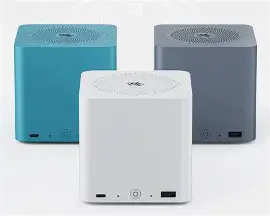
Key advantages for real-world use:
- Small footprint fits a crowded desk or a media cabinet, freeing up space compared with a tower PC.
- Local storage options reduce reliance on cloud services for large media libraries or backups, which is valuable in bandwidth-constrained environments.
- Low-power hardware keeps electricity consumption and operating noise low, making it suitable for open-plan home offices and living rooms.
- Many models offer flexibility in software: Windows, a Linux distribution, or a dedicated NAS OS, enabling a variety of roles.
What buyers often care about—expandability, thermal performance, and network throughput—can vary widely by configuration. For example, the presence of multiple drive bays or M.2 slots, the availability of gigabit Ethernet (or faster), and the ability to upgrade RAM are deciding factors for long-term use.
Looking for the best Laptops & Computers deals on Amazon?
View Offers →Contour Design Unimouse — analysis
The Unimouse targets ergonomics and customization for the human interface. Its defining feature is adjustability: users can change the angle of the hand, set the thumb rest to a comfortable position, and typically take advantage of multiple buttons to speed up workflows. These characteristics make it especially relevant for knowledge workers, developers, graphic designers, and others who spend many hours manipulating the cursor.
Real-world benefits include:
- A measurable reduction in awkward wrist angles—important for preventing or reducing symptoms of RSI over long sessions.
- Precision and control that suits both general office tasks and detailed work like photo editing or spreadsheet navigation.
- Adjustability makes it a better long-term investment than many single-shape mice, because it can be tuned as posture or hand comfort changes.
Buyers typically ask about platform compatibility (macOS, Windows, Linux), the reliability of adjustment mechanisms, battery life for wireless models, and software for customizing buttons and DPI. The Unimouse’s niche is improving human performance and comfort rather than raw tracking performance.
Pros & cons
Beelink Me Mini NAS Mini PC
- Pros: Compact footprint, low power consumption, flexible storage options, quiet operation for most workloads, versatile software choices (desktop or NAS OS).
- Cons: Limited thermal headroom for sustained heavy CPU/GPU loads, smaller upgrade path compared with full towers, potential need to tinker with drivers or NAS software for advanced features.
Contour Design Unimouse
- Pros: Highly adjustable ergonomics, reduced wrist deviation and fatigue, suitable for long sessions, often includes programmable buttons for productivity.
- Cons: Adjustment complexity can be intimidating for some users, ergonomics are subjective (not every shape fits every hand), wireless models require battery maintenance, and premium price relative to generic mice.
Comparison table
| Criteria | Beelink Me Mini NAS Mini PC | Contour Design Unimouse |
|---|---|---|
| Primary function | Compact computing + local storage / small NAS | Ergonomic pointing device for long-session comfort |
| Form factor | Small box, desk or cabinet placement | Handheld mouse with adjustable components |
| Typical users | Home-office users, media enthusiasts, small-business owners | Office professionals, creatives, users with wrist/forearm concerns |
| Performance focus | Efficient background tasks, network storage, media streaming | Cursor precision, click responsiveness, comfort |
| Expandability | Often includes slots for additional drives and RAM upgrades | Limited to physical adjustments and button remapping |
| Noise & heat | Typically low; dependent on fan design and workload | Not applicable (silent), except for occasional mechanical clicks |
| Setup & maintenance | OS install, drive setup, network config; occasional maintenance for backups | Plug-and-play; optional software for button customization and DPI |
| Value proposition | Centralizes files and services, reduces reliance on cloud | Improves comfort and reduces cumulative strain over time |
Real-world use cases and buyer concerns
Home-office productivity
For someone building a tidy home-office setup, the mini PC shines by reducing cable clutter and providing on-site storage for documents, large media files, and backups. The Unimouse complements this by reducing hand fatigue during the long stretches of typing and pointing that remote work demands. Together they address both the infrastructure and human factors of daily productivity.
Media server / HTPC
Users who want a silent media server or compact HTPC will favor the mini PC’s storage and networking features. The Unimouse has limited relevance here beyond being a comfortable controller for navigation and occasional content editing sessions.
Content creation and editing
Photographers and video editors may value both: the mini PC offers a dedicated space for large file storage and local editing projects, while the Unimouse improves precision and reduces strain during fine-grained cursor work. In workflows involving long timelines and detailed retouching, the ergonomic benefits can translate into fewer breaks and less discomfort.
Find top-rated Laptops & Computers products at great prices.
View Offers →Small business or home lab
Small business owners who need local file services and reliable uptime will find the mini PC valuable. If staff spend many hours on a single workstation, investing in ergonomic mice like the Unimouse can reduce absenteeism and increase productivity—making it a workplace-health purchase rather than a luxury.
Buying guide — how to choose between them (or decide to buy both)
Choosing between these two products depends on priorities. The following checklist helps align the purchase with real needs:
1. Define the primary problem
- If the pain point is limited storage, unreliable cloud, or a cluttered desktop with multiple devices, prioritize the mini PC with NAS capabilities.
- If the problem is wrist pain, fatigue, or loss of precision during long sessions, prioritize an ergonomic mouse such as the Unimouse.
2. Consider the environment
- Space-constrained or shared living spaces benefit from the mini PC’s compactness and low noise profile.
- Open-plan offices or remote workers who use a single workstation for many hours will see the most benefit from an ergonomic mouse.
3. Compatibility and software
- Confirm the mini PC’s OS options and whether required server features (file protocols, virtualization, containerization) are supported without extensive tinkering.
- Check the Unimouse for driver support and customization software for the operating systems in use—buyers who need custom button mappings or macro support should verify software availability.
4. Expandability and longevity
- For the mini PC, look for models with accessible drive bays or M.2 slots and the ability to upgrade RAM to extend the device’s useful life.
- For the Unimouse, examine the build quality of adjustment mechanisms; a robust hinge and reliable locking will determine whether it remains comfortable after months or years of use.
5. Noise, thermals, and reliability
- Ask about fan control modes and passive cooling options for the mini PC if noise is a concern. Read real-user reports about thermal throttling under sustained loads.
- For the Unimouse, check user reviews for button longevity and consistency of the sensor over time.
6. Budget and total cost of ownership
- Consider long-term costs: energy consumption and potential replacement drives for the mini PC; batteries (or replacements) and potential peripherals for the mouse.
- Remember that investing in ergonomics can reduce health-related costs and downtime—sometimes justifying a higher upfront price for a quality mouse.
Final recommendation and practical takeaways
In this blind test framed by buyer priorities, neither product is universally "better"—they simply address different, often complementary, needs. The Beelink Me Mini NAS Mini PC is the better choice for those who need a compact, quiet, and flexible local server or desktop replacement that centralizes storage and services. The Contour Design Unimouse is the better choice for anyone whose day-to-day comfort, long-session productivity, or repetitive strain prevention is a priority.
For most home-office buyers, the decision should be guided by immediate pain points: choose the mini PC if infrastructure and storage are the constraints; choose the Unimouse if physical comfort and input precision are the constraints. Many users will find that buying both yields the best overall outcome—one product improves the workspace infrastructure while the other optimizes the human-machine interface.

Conclusion
The Beelink Me Mini NAS Mini PC and the Contour Design Unimouse provide clear, focused value in very different domains. The mini PC contributes to a cleaner, more capable workspace by consolidating compute and storage into a small, quiet package. The Unimouse enhances the day-to-day experience by reducing strain and improving control during extended use. Buyers should prioritize according to whether their bottleneck is the hardware infrastructure or the human interface; where possible, both investments complement one another to produce a more efficient, comfortable, and resilient workstation.