Don't Buy the Hp Omnibook Ultra Flip 14 Until You Read This Full Analysis
Introduction
The HP Omnibook Ultra Flip 14 arrives in a crowded market of 14‑inch convertibles and ultraportables. It promises the versatility of a 2‑in‑1 hinge, a compact footprint for travel, and the performance to handle everyday productivity and light creative work. Yet, buyers who prioritize battery life, thermals under load, or the best display for color‑critical tasks will want to look closely before committing.
This article provides a practical, third‑person analysis of the Omnibook Ultra Flip 14 for real‑world buyers. It walks through design, performance, display, battery, I/O, and usability, weighs pros and cons, compares it to plausible alternatives, and offers a focused buying guide tuned to what students, professionals, and frequent travelers typically care about.
Detailed Product Review and Analysis
Design and build quality
The Omnibook Ultra Flip 14 targets users who need a convertible that feels premium without being overly heavy. The chassis typically blends metal and reinforced plastic to keep weight down while maintaining rigidity. The defining feature is the 360° hinge that converts the laptop into tent, tablet, and presentation modes.
For buyers, hinge smoothness and long‑term durability are important. The Omnibook’s hinge generally balances resistance and fluid motion—suitable for frequent mode changes. However, hinge behavior can vary between units and over time; users planning to fold the device open and closed dozens of times daily should verify warranty terms and run‑in behavior in store if possible.
Display: readability, color and touch
A 14‑inch display size is a sweet spot for productivity and portability. The Omnibook commonly ships with touch‑enabled IPS or OLED panels (depending on configuration) and supports stylus input on select models. Buyers who sketch, annotate, or take handwritten notes will appreciate active pen options, though pen latency and nib feel are the real determinants of the experience.
Color accuracy and peak brightness matter for creators and travelers who use the laptop outdoors. The Omnibook’s IPS panels typically deliver solid sRGB coverage for web work and video playback; an OLED or higher‑end IPS option provides richer contrast and deeper blacks for content consumption. Buyers doing color‑sensitive work should seek configuration details for color gamut and consider an external calibrated display instead of relying solely on the built‑in panel.
Performance and thermals
Configurations vary: the Omnibook is offered with recent Intel or AMD mobile processors and integrated or entry‑level discrete graphics. For office tasks, web browsing, and light photo editing, an energy‑efficient Core or Ryzen U‑class chip with 8–16 GB of RAM is adequate. Heavy multitaskers, video editors, and 3D artists will require higher‑end CPUs and more RAM—expect tradeoffs in battery life and fan noise.
Thermals in thin convertibles are always constrained by chassis thickness. Under sustained CPU or GPU load the Omnibook can run warm and the fans may ramp up; cooling performance depends on the internals and whether the configuration includes a discrete GPU. Buyers who regularly run long, demanding workloads should test thermal throttling or choose a clamshell laptop with a thicker cooling solution.
Battery life and charging
Battery life depends hugely on configuration, display choice, and workload. In everyday mixed usage—web browsing, streaming, document editing—users can expect a full day in most conservative configurations, while brighter displays or discrete graphics reduce endurance. Fast‑charge support is a convenience for commuters, but the real measure is usable hours in the user’s typical work pattern.
Travelers should verify whether the Omnibook charges via USB‑C and whether that USB‑C port supports charging and display output simultaneously. USB‑C charging increases flexibility for carrying a single charger for multiple devices, but HP’s bundled chargers and wattage vary by region and model.
Keyboard, trackpad and pen experience
The keyboard on a 14‑inch convertible must balance key travel with a shallow frame; the Omnibook typically delivers a comfortable typing experience for long sessions, though those who type very quickly may prefer a larger chassis. Key backlighting is useful for low‑light work.
Trackpads in this class use precision drivers and often feel smooth and accurate; glass trackpads are a plus. For pen users, palm rejection and tilt support matter; buyers should check which pen protocol is supported (AES, MPP, or Wacom) and whether the pen is included or sold separately.
Looking for the best Laptops & Computers deals on Amazon?
Shop Amazon →Ports and expandability
Port selection is a practical consideration that often influences daily workflow. The Omnibook Ultra Flip 14 typically offers a combination of USB‑C (with or without Thunderbolt), USB‑A, HDMI or micro‑HDMI, and a microSD or full‑size SD card slot on some SKUs. The absence of an HDMI port or a full‑size SD slot is a nuisance for photographers and presenters who regularly use those interfaces.
On modern ultraportables, storage and RAM are sometimes soldered; this affects longevity and upgradeability. Buyers who plan to keep a machine for several years should seek models with user‑accessible M.2 storage or explicitly confirm upgrade options before purchase.
Audio, webcam and privacy
Speakers in thin laptops prioritize clarity over bass; the Omnibook is no exception. The audio is adequate for video calls and light media consumption, but external speakers or headphones are recommended for richer sound. Webcam quality and microphones matter more now than ever; look for at least 720p webcams with good noise‑cancelling mics if video conferencing is frequent. Integrated privacy shutters are a nice touch for privacy‑minded buyers.
Software, warranty and serviceability
HP machines ship with Windows and a suite of HP utilities. Buyers should be prepared to remove or disable bloatware they don’t need. Warranty coverage and customer service responsiveness vary by country—extended warranty options and accident protection are worth considering for mobile users who travel or commute daily.
Serviceability—how easy it is to open the chassis and replace an SSD or battery—can be a deciding factor for people who want to maintain a machine for multiple years. If long‑term repairability matters, confirm whether HP uses common fasteners and modular components or if parts are glued or soldered.
Real‑world use cases
Students: For note‑taking, web research and the occasional media session, the Omnibook’s convertible design and lightweight nature make it attractive. Battery life and a comfortable keyboard are the primary metrics for students.
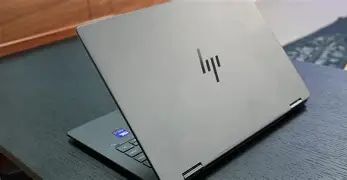
Frequent travelers: Portability and USB‑C charging are priorities. The Omnibook’s hinge and thin profile fit airline trays well, but check whether the battery and screen brightness meet long flight or layover requirements.
Business users: Security features, webcam quality, and keyboard comfort matter most. Enterprise buyers should evaluate available security options such as TPM, fingerprint readers, and optional vPro/AMD Pro features.
Content creators: Those who edit photos or video will want the best display option available, more RAM, a faster CPU, and preferably a discrete GPU. For color grading or professional photo editing, external calibrated monitors are recommended regardless of the laptop configuration.
Pros & Cons
- Pros:
- Versatile 360° hinge for tablet and tent modes—useful for presentations and reading
- Compact 14‑inch footprint balances screen size and portability
- Touch and pen support available on select configurations for annotation and light drawing
- Typically solid keyboard and precision trackpad for productive typing sessions
- Often includes modern connectivity like USB‑C charging and display output
- Cons:
- Thermals and fan noise may be noticeable under sustained heavy load
- Display options vary—higher‑end panels cost more and may be limited to specific SKUs
- Upgradeability can be limited if RAM is soldered or the chassis is tightly integrated
- Port selection on thin models may omit full‑size HDMI or multiple USB‑A ports
- Real‑world battery life depends heavily on configuration—bright OLED/4K options drain faster
How the Omnibook Ultra Flip 14 Compares
The table below compares the Omnibook Ultra Flip 14 to three common alternatives in the 14‑inch convertible and ultraportable space. Exact configurations vary by region; use this as a high‑level guide when evaluating competitors.
| Model | Form factor | Typical CPU options | RAM / Storage options | Battery life (typical) | Weight (typical) | Standout for |
|---|---|---|---|---|---|---|
| HP Omnibook Ultra Flip 14 | 14" 2‑in‑1 convertible | Recent Intel/AMD U‑class processors | 8–16 GB; 256–1 TB NVMe | All‑day in light use; varies by display | Lightweight—built for travel | Versatility and value in a compact convertible |
| HP Spectre x360 14 | 14" premium convertible | Higher‑end Intel options; OLED available | 8–16 GB; 256–2 TB NVMe | Strong for mixed use with efficient options | Similar to Omnibook; premium build | Premium materials, high‑quality displays |
| Lenovo Yoga 7i (14) | 14" convertible | Intel U‑class or Ryzen mobile | 8–16 GB; 256–1 TB NVMe | Balanced battery life | Comparable weight | Comfortable keyboard and enterprise features |
| Dell XPS 13 2‑in‑1 | 13–13.4" convertible (compact) | Intel U‑class | 8–32 GB; 256–2 TB NVMe | Very good in balanced configurations | Extremely compact and light | Best for maximum portability and premium fit/finish |
Buying Guide: What to Check Before You Buy
When evaluating the HP Omnibook Ultra Flip 14, buyers should prioritize a short checklist aligned with their needs. The following guide helps choose the right configuration and avoid common pitfalls.
1. Define your primary use case
Decide whether the laptop will be used mainly for web and office work, mixed creative tasks, or heavier content creation. Light office use leans toward energy efficient CPUs and smaller storage; creative work benefits from more RAM, a better display panel, and faster storage.
Find top-rated Laptops & Computers products at great prices.
Browse Now →2. Choose the right display
For general productivity, a standard IPS touch panel is fine. For photo or video work, look for wide color gamut options and higher brightness. If pen input matters, verify pen support and latency in hands‑on reviews.
3. RAM and storage—plan for the medium term
8 GB of RAM is the minimum for comfortable multi‑tasking; 16 GB is recommended for power users. Confirm whether RAM is soldered; if so, opt for a configuration with the RAM you expect to need over the next three to five years. Prefer NVMe SSDs for speed; larger capacities matter if the buyer works with large media files.
4. Battery and charging behavior
Look at realistic battery tests that match the intended use (video playback, web browsing with multiple tabs, video conferencing). Verify if USB‑C charging is supported and whether the included charger offers fast charge to minimize downtime between sessions.
5. Ports and expandability
Make sure essential ports are present: at least one USB‑A for legacy accessories, a USB‑C that supports data/charging/display, and an external display option if presentations are common. If an SD card slot is needed for photography, confirm whether it’s full‑size or microSD.
6. Thermals and noise
Read or watch sustained workload tests to learn whether the Omnibook throttles for long editing sessions. If quiet operation is a priority (e.g., recording or quiet study), test or review fan noise behavior.
7. Warranty, support and serviceability
Check the standard warranty length and whether accidental damage protection is available. For devices used daily and on the road, extended coverage can be valuable. If long ownership is planned, confirm how easy it is to replace the SSD or battery.
8. Try before you buy
If possible, test a display and keyboard in person. Convertibles are tactile devices—hinge stiffness, keyboard travel, and pen feel only reveal themselves in hands‑on use. If an in‑store test isn’t possible, rely on reputable reviews and verified user feedback.
Conclusion
The HP Omnibook Ultra Flip 14 is a compelling entry in the compact convertible space: it blends a travel‑friendly 14‑inch footprint with the flexibility of a 2‑in‑1 hinge and touch/pen capabilities. For students, light professionals, and travelers who prioritize versatility and portability, it is worth serious consideration.
However, buyers who need sustained heavy performance, the absolute best color‑accurate display out of the box, or a machine that is easy to upgrade should pause and compare configurations or alternatives. Thermals, display choice, upgradeability and real‑world battery life are where the Omnibook’s different configurations diverge the most—those are the points to validate before purchase.
Ultimately, the Omnibook Ultra Flip 14 can be an excellent daily driver when configured for the user’s needs. But the spectrum of available options—and the tradeoffs between performance, battery life, and repairability—make it essential to match the chosen SKU to the buyer’s real‑world use case rather than relying solely on headlines or promotional materials.