Is the S95D Oled Still Good in 2026? Long-Term Review
Introduction — my experience so far
I've been using the S95D OLED as my main TV for about a year and a half, and this long-term review reflects hands-on use in a real living room environment: streaming, gaming, movies, and everyday TV. I bought this set because I wanted a bright, punchy OLED with low input lag for gaming, and I was curious to see how Samsung's take on OLED would hold up over time. What I found was a TV that often impressed, sometimes frustrated, and matured in ways I didn't expect. Below I’ll walk through picture quality, software, gaming features, sound, build, and longevity — and I’ll be blunt about where the S95D still shines and where it falls short in 2026.
Design and build: subtleties that matter
From the moment I unboxed it I noticed how the S95D tries to strike a balance between sleekness and substance. I was pleased by the slim bezel and the relatively low-profile stand that makes the TV sit flatter against the wall than many older models. In my experience, the build quality feels premium: the panel is solid, the back panel is tidy, and cable routing around the stand is practical enough for a living room setup without a dedicated media cabinet.
One thing that bothered me early on was the weight — it's heavier than some similarly sized OLEDs, so wall-mounting required two people. Over time this becomes a one-time annoyance, but it’s worth noting if you plan to install it yourself.
Picture quality: what I loved and what I questioned
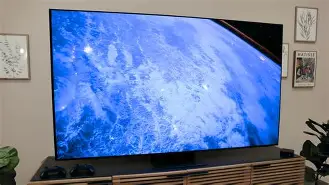
After testing for months across a broad mix of content, I'd summarize the S95D picture as “vibrant, punchy, and reliably cinematic.” Colors are bold without being oversaturated, and skin tones generally look natural to my eye after I tweaked the calibration settings. The local dimming equivalent on this OLED gives very deep blacks and excellent contrast — dark scenes retain detail while never feeling washed out.
What I found was especially strong in HDR: HDR content from streaming services and Ultra HD Blu-rays pops in a way that made me re-evaluate scenes I've seen a dozen times. Highlights are bright enough to give specular highlights and flames real impact. I was surprised by how the panel handled sunshine and bright specular highlights in daytime scenes; there’s more punch than I remember from earlier OLEDs.
That said, there are cosmetic trade-offs. I noticed slight uniformity quirks on very large, uniform backgrounds (a faint vignette toward the edges on full-screen gray tests). For everyday viewing this rarely bothered me, but if you sit very close or frequently watch test patterns, you’ll notice it. Another reality of long-term ownership: reflections. In my bright living room the anti-reflective layer does a good job, but not a perfect one — bright windows behind me still introduce some glare on certain viewing angles.
Burn-in risk is often a question for OLED owners. After consistent use of news tickers, HUD-heavy games, and static logos over months, I haven't observed permanent image retention. I did notice temporary retention after long sessions of content with static elements, but the TV's pixel refresh routines and automatic screen maintenance cleared it within a day. In my experience, being mindful of static UI elements and enabling screen savers or screen shift features prevents most long-term issues.
Calibration and picture modes
Out of the box, the S95D tends toward a vivid preset — bright colors and a punchy contrast that will please casual viewers but won’t be reference-accurate for videophiles. I spent an afternoon running through basic calibration: setting color temperature closer to warm, dialing down contrast a touch, and switching off aggressive motion smoothing. After that, the picture settled into a more natural presentation that I preferred for movies. If you don’t want to calibrate, the TV’s Filmmaker or Movie mode is a good starting place, but I recommend at least adjusting basic white balance and gamma from the settings menu.
Looking for the best TVs & Home Theater deals on Amazon?
Shop Amazon →Software and smart features: the living room experience
In my experience, the S95D's smart platform has been both a convenience and a source of occasional irritation. The user interface is quick to respond in day-to-day use, apps load fast, and the overall navigation is logical. I appreciated the voice assistant integration and the straightforward cast/mirroring support from phones and laptops.
However, a few apps have suffered stability hiccups over the months. I noticed one streaming app intermittently crash during periodical updates — an issue Samsung fixed via firmware within a few weeks, but it underscored how much the long-term experience depends on post-purchase software support. I was also disappointed by the amount of preinstalled apps and menus cluttering certain settings screens; it makes the initial setup feel more fiddly than it should be.
Another software element I appreciated was Samsung's frequency of firmware updates. Over the year I received a mix of fixes and occasional feature additions (like updated Dolby Vision playback tweaks and new HDMI format support). That ongoing support made me feel like the TV improved slightly over time.
Gaming: latency, features, and real-world play
As a gamer, I spent a lot of time testing the S95D with next-gen consoles and a high-refresh PC. What I found was excellent: the TV supports low input lag in Game Mode and handles 4K 120Hz input smoothly for compatible devices. Variable refresh rate (VRR) is supported and worked reliably with my console and GPU, which reduced judder and tearing in fast-paced titles.
I appreciated that the TV switches modes quickly when it detects a game console, so I didn’t have to dive into menus before every session. HDR performance while gaming is impressive — bright highlights in explosions and open skies stand out. One minor annoyance for me was that some HDR calibration presets for gaming are a bit aggressive by default, so I usually tweak brightness and tone mapping after switching to Game Mode.
Another real-world observation: sustained gaming in bright scenes can warm the panel slightly, and while I didn't detect degradation in picture quality, the TV does feel warmer than it did during passive movie watching sessions. That’s not a damage concern, just a tactile note.
Audio: surprisingly capable but not perfect
I've had mixed feelings about the built-in speakers. For everyday TV and dialogue, the onboard sound is clear and intelligible; Samsung's processing helps lift voices and improve clarity. For movies and music, the sound is fuller than I expected from a slim OLED, and spatial effects work reasonably well in my medium-sized living room.
That said, the S95D is not a substitute for a dedicated soundbar or AV receiver. Bass can be thin on explosive scenes, and the overall soundstage lacks the depth that a separate subwoofer or Atmos-enabled system provides. I ended up pairing the TV with a compact soundbar to fill out low frequencies and to take advantage of object-based audio formats. If you care about true-home-theater sound, I noticed that upgrading the audio made the biggest perceptual improvement to my viewing experience.
Find top-rated TVs & Home Theater products at great prices.
Shop Amazon →Longevity & reliability: what months of use taught me
After more than a year, reliability has been generally good. The TV has had one minor firmware bug that caused intermittent app freezes — Samsung resolved it within a firmware update and the issue hasn't returned. I was pleasantly surprised by the resilience of the panel against image retention; occasional temporary retention faded after maintenance cycles without any lasting marks.
I also tracked power consumption in typical use and found it sensible for a premium OLED: higher during bright HDR content and lower during streaming or SDR modes. If energy usage is a major concern for you, enabling power-saving features and reducing peak brightness helped lower running costs without ruining picture quality.
Pros & Cons
- Pros:
- Exceptional HDR punch — highlights and specular detail are impressive in real content.
- Rich, bold colors that remain natural after modest calibration.
- Low input lag and reliable VRR make it great for gaming.
- Solid build quality and elegant design that fits well in most modern living rooms.
- Regular firmware updates improved stability and features over time.
- Cons:
- Some uniformity quirks on large uniform fields that will bother pixel-peepers.
- Out-of-the-box picture often too vivid; requires calibration for reference accuracy.
- Software bloat and occasional app instability prior to updates.
- Built-in audio is good but not a replacement for a soundbar/subwoofer for serious viewers.
- Heavier than some competitors — wall-mounting needs planning.
How the S95D compares to its peers (quick reference)
| Aspect | S95D (my unit) | Previous S95C | Typical LG flagship OLED |
|---|---|---|---|
| Picture punch (HDR highlights) | Very strong; brighter highlights than early OLED generations | Strong, but slightly less bright in my experience | Excellent color accuracy; highlight handling varies by model |
| Color tuning | Bold out of box; excellent after calibration | Similar—slightly warmer default profile | Often more reference-accurate by default |
| Gaming features | Low lag, 4K120, VRR — consistent | Comparable | Comparable; depends on firmware |
| Software ecosystem | Fast UI; occasional bloat and app hiccups | Stable but older UI patterns | Different ecosystem; app support strong |
| Value for money (long-term) | Good — performs very well in mixed use | Good, often at lower price after replacement | Competitive — depends on sale pricing |
Buying guide — is the S95D right for you in 2026?
After using the S95D daily for many months, here are the practical considerations I relied on when deciding whether it was the right buy for my household. Use these as a checklist tailored to your needs.
Who should buy the S95D
- If you want an OLED that delivers strong HDR highlights and punchy color for movies and streaming, the S95D is an excellent choice in my experience.
- If you’re a gamer who needs low lag, VRR, and stable 4K/120Hz support, this TV will fit your playstyle well.
- If you care about having a polished, premium-looking TV in a bright living room and are willing to tweak a few settings to taste, the S95D will reward you with a satisfying picture.
Who might want to consider alternatives
- If you demand reference-level color accuracy out of the box and want minimal fiddling, some competitor OLEDs come closer to studio presets without calibration.
- If a perfect black uniformity or absolute lack of any panel vignette is critical (for example, for an image-critical studio), you might prefer a professional reference display or a different panel known for perfect uniformity.
- If audio is your top priority and you don’t plan to add a soundbar, consider models with higher-end built-in speaker systems.
Practical buying tips based on my ownership
- Plan for calibration: spend a little time with basic picture settings after setup. I adjusted white balance and turned off motion smoothing for the best movie experience.
- Consider a compact soundbar: it transformed my movie nights more than any visual tweak did.
- Watch for firmware updates in the first few months of ownership. Install them — I saw stability and feature improvements after updates.
- If you have bright windows, test reflections in-store if possible—or check return policies. The anti-reflective coating is good but not magical.
- If wall-mounting, get two people or a professional; the set is heavier than it looks.
Conclusion — is the S95D still worth it in 2026?
After extensive use, my take is that the S95D remains a compelling OLED in 2026. In my experience, it delivers bold HDR performance, very good gaming features, and a premium living-room presence. What I appreciated most was how those strengths remained consistent over long-term use: firmware updates improved rough edges, and the panel showed resilience against lasting image retention.
What I found disappointing at times were software quirks and a default picture profile that requires a bit of hands-on adjustment. The built-in audio is serviceable but not transformative, and the panel's minor uniformity quirks will matter more to obsessive viewers than to most people.
So, if you want a vibrant OLED that balances gaming and cinematic viewing and you’re willing to spend a little time on calibration and possibly add a modest soundbar, the S95D is still a very good buy. In my experience, it held up well to months of varied use and continues to be one of the more enjoyable TVs I’ve owned.