Samsung Galaxy S26 Ultra Specs, Features, and Value: Is it worth the price tag?
Short answer: For buyers who prioritize top-tier camera versatility, the brightest and most private flagship display, sustained performance for demanding apps, and long-term software support, the Samsung Galaxy S26 Ultra represents one of the best-constructed flagship packages on the market in 2026. For more price-sensitive shoppers or those who value compact size and excellent value-per-dollar over absolute cutting-edge features, competing models or previous-generation Ultra devices may offer better overall value.
Introduction
The Samsung Galaxy S26 Ultra arrives as Samsung’s marquee flagship for the year, carrying forward the company’s focus on camera performance, display innovation, and broad software feature sets through Galaxy AI. The S26 Ultra introduces a notable hardware-level Privacy Display along with incremental but meaningful improvements to cameras, charging speed, and on-device AI. This review walks through the S26 Ultra’s key specifications, how those translate to everyday experiences, its strengths and weaknesses, and whether its price tag aligns with what shoppers typically care about.
What the S26 Ultra brings to the table: headline specs
The S26 Ultra ships with a 6.9-inch Dynamic LTPO AMOLED 2X QHD+ panel that supports a 120 Hz adaptive refresh rate, HDR10+, and industry-leading peak brightness. Samsung’s official spec sheet highlights the new built-in Privacy Display which reduces off-axis visibility at a hardware level, aimed at people who frequently use their phones in public. Performance is driven by Qualcomm’s Snapdragon 8 Elite Gen 5 on a 3 nm process, paired with LPDDR5X RAM in 12 GB and 16 GB configurations and UFS 4.0 storage options up to 1 TB.
Camera hardware is a focal point: a 200 MP main sensor with optical image stabilization and improved low-light processing sits alongside a 50 MP ultra-wide, a 10 MP 3x telephoto, and a 50 MP periscope telephoto that provides 5x optical zoom. Video recording reaches up to 8K30 and 4K120, with Samsung’s computational photography features and Galaxy AI enhancements layered on top.
Battery capacity remains at 5,000 mAh with faster 60 W wired charging and Qi2.2 wireless charging. The phone includes an S Pen with an internal slot, IP68 dust/water resistance, an ultrasonic under-display fingerprint sensor, and connectivity that includes Wi‑Fi 7, Bluetooth 6.0, UWB, and 5G. Samsung promises extended software updates and security support, an important consideration for long-term ownership.
Detailed product analysis: real-world performance and features
Display and privacy
At its core the S26 Ultra’s display is every bit what buyers expect from a Samsung flagship: exceptionally bright peaks, excellent color accuracy, and a smoothly adaptive refresh rate that conserves battery during static content. The notable new feature—Privacy Display—is implemented at the panel level to reduce viewing angles and make shoulder surfing harder. In real-world usage this helps commuters, office workers, and travelers who review sensitive emails, banking apps, or private photos on the go. The trade-off is minor: viewing angles are slightly more directional, which is invisible to most users but noticeable if two people want to view the screen simultaneously from different sides.
Performance and daily use
The Snapdragon 8 Elite Gen 5 is a high-end SoC, and paired with LPDDR5X and UFS 4.0 storage the S26 Ultra handles demanding tasks—multitasking between large documents, video editing, or extended gaming sessions—without stutter. For content creators, the improved on-device AI features in One UI (Galaxy AI) accelerate tasks like on-device photo edits, live transcription, and translation. Thermal management is solid for typical day-to-day workloads, but extended sustained loads (long gaming marathons with max settings) will still cause thermal throttling similar to most modern thin flagship phones.
Shop the latest Mobile Phones picks on Amazon.
See Deals →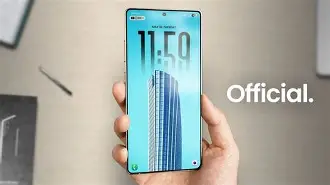
Cameras and computational imaging
Samsung’s camera hardware has been improved in meaningful ways: the 200 MP main sensor offers higher-resolution captures and better detail retention, while the dual telephoto setup (3x and 5x) provides flexibility for portraiture and long-range subjects without relying purely on digital zoom. In practical terms, users who photograph landscapes, events, and distant subjects will appreciate the periscope tele’s image quality at medium distances and the main sensor’s improved low-light results. Night shots show better dynamic range and less aggressive noise reduction compared with earlier models, and video shooters get reliable stabilization and high-resolution options up to 8K.
Battery life and charging
Samsung kept a 5,000 mAh battery but improved charging throughput to support a 60 W wired profile and faster wireless charging. For most users the S26 Ultra comfortably delivers a full day of heavy use—camera work, navigation, streaming, and social apps—with some room to spare. Power users who game or shoot video all day should plan on mid-day top-ups. Samsung’s battery optimizations and adaptive refresh help extend battery life in mixed-use scenarios.
Software, updates, and ecosystem
One UI with Galaxy AI emphasizes on-device intelligence—automated photo edits, enhanced language features, and privacy controls integrated into the experience. Samsung’s long-term software commitments (multiple major Android OS upgrades and years of security patches) increase the S26 Ultra’s long-term value: buyers who plan to keep their phone for several years benefit from this support more than those who upgrade annually.
Build quality and extras
With an armor aluminum frame and Gorilla Glass, the S26 Ultra feels solid and premium in hand. The return of the S Pen and its internal slot appeals to productivity-focused buyers who use notes, sketches, and quick markups. The phone’s IP68 rating and robust antenna design mean reliable performance across networks and weather conditions.
Pros & Cons
- Pros:
- Industry-leading brightness and color-accurate QHD+ LTPO AMOLED with hardware Privacy Display
- Versatile high-resolution camera system including a 200 MP main sensor and a 5x periscope telephoto
- Top-tier performance with Snapdragon 8 Elite Gen 5 and LPDDR5X
- Long software support and strong privacy features
- S Pen included with built-in slot for productivity
- Robust connectivity: Wi‑Fi 7, UWB, 5G
- Cons:
- Flagship price point that can be difficult to justify for casual users
- Large size and weight may be unwieldy for users who prefer compact phones
- 60 W wired charging is faster but still slower than some competitors’ peak charging figures
- No microSD expansion—large RAW or video workloads require higher storage tiers upfront
Comparison table: how the S26 Ultra stacks up
| Feature | Samsung Galaxy S26 Ultra | Samsung Galaxy S25 Ultra | Key Competitor (Example: Pixel 9 Pro) |
|---|---|---|---|
| Display | 6.9" LTPO AMOLED, QHD+, 120 Hz, Privacy Display | 6.8" LTPO AMOLED, QHD+, 120 Hz | 6.7" OLED, QHD+, 120 Hz |
| SoC | Snapdragon 8 Elite Gen 5 | Snapdragon 8 Gen 3 / Exynos variant | Tensor G4 or equivalent |
| Main Camera | 200 MP, OIS | 108–200 MP (varies by region) | 50–64 MP computational-first sensor |
| Optical Zoom | 3x + 5x periscope | 3x + 10x / 5x depending on model | 2x–5x range (software-assisted) |
| Battery & Charging | 5000 mAh, 60 W wired, 25 W wireless | 5000 mAh, up to 45–65 W wired | 4800–5000 mAh, ~30–60 W wired |
| Storage/RAM | 256/512/1TB, 12/16 GB | 128–1TB, 12 GB | 128–512 GB, 12 GB |
| Extras | S Pen, Privacy Display, Wi‑Fi 7, long update promise | S Pen, strong camera, earlier One UI | Clean Android, unique AI features, strong photo processing |
Buying guide: who should consider the S26 Ultra?
Best for
- Photography enthusiasts and hybrid creators: The pairing of a high-resolution main sensor with dual telephoto optics and advanced computational photography makes the S26 Ultra especially useful for people who shoot a lot of photos and video and want fewer compromises on zoom quality and low-light performance.
- Productivity users who value an S Pen: If note-taking, sketching, or quick annotation are part of the daily workflow, the included S Pen and its software integration make the S26 Ultra a strong choice.
- Privacy-conscious users: The hardware Privacy Display and enhanced software privacy controls are appealing for professionals who regularly use their phone for sensitive communications in public places.
- Long-term owners: Buyers planning to keep a phone for multiple years benefit from Samsung’s extended update policy and robust build quality.
Less suitable for
- Budget-conscious shoppers: The S26 Ultra’s premium price is hard to justify if someone’s needs are well-covered by prior-generation flagships or mid-range devices.
- Those needing compact phones: The large display and weight make the phone awkward for one-handed users or those who carry it in small pockets.
- Users who rely on expandable storage: With no microSD slot, photographers and videographers should consider higher-capacity models at purchase or plan for cloud/backups.
Which configuration to choose?
Storage-heavy users (RAW shooters, heavy video) should opt for 512 GB or 1 TB to avoid running into space issues. Most users will find 12 GB of RAM sufficient, but power users and those who keep phones for many years can choose 16 GB for extra headroom. Color and finish are a personal choice; functional considerations such as the availability of certain color options on specific carrier bundles may affect decisions in some regions.
Accessories and protection
Given the high price and glass construction, a sturdy case and screen protector are sensible purchases. Buyers who frequently work outdoors may also consider a carrying solution or a small gimbal for stabilized video capture. For those who travel often, confirming regional compatibility for 5G band coverage is advised.
Looking for the best Mobile Phones deals on Amazon?
See Deals →Price and value considerations
The S26 Ultra comes at a flagship price that reflects Samsung’s investment in display technology, camera hardware, and extended software support. The perceived value depends heavily on use case: a content creator who monetizes photography or video will see the device as an investment because of the improved optics and on-device features. Conversely, someone who uses a phone mainly for messaging, social media, and occasional photos will get similar day-to-day experiences from lower-cost models or last year’s Ultra at a reduced price.
Trade-in programs, carrier discounts, and seasonal promotions can substantially alter the value proposition. Because the S26 Ultra is built to be supported for many years, amortizing its cost across a longer ownership period improves its value-per-dollar ratio.
Conclusion
The Samsung Galaxy S26 Ultra is a compelling flagship that pushes forward in areas that matter to power users: display innovation with the Privacy Display, camera versatility with a high-resolution main sensor and periscope zoom, and sustained high performance with modern silicon and generous RAM/storage options. Its long software support further enhances ownership value for those who keep devices for multiple years.
Whether the S26 Ultra is worth its price depends on individual priorities. For photographers, professionals, and privacy-focused users who will make consistent use of the device’s headline features, it is a strong and future-proof choice. For buyers focused primarily on everyday convenience and value, last-generation flagships or premium mid-range devices may provide a better balance between cost and capability.
Ultimately, the S26 Ultra is engineered to be a flagship in every sense: it elevates the experience in niches that matter to power users while maintaining the polish and ecosystem depth many Samsung customers expect. Prospective buyers should weigh how often they will use the improved camera system, Privacy Display, and S Pen features against the premium price to decide if it aligns with their needs and budget.