Why Everyone is Buying the Unihertz Titan 2 (Full Review)
I've been using the Unihertz Titan 2 as my daily driver for several months now, and I wanted to share a detailed, honest account of what it's like to live with this unusual phone. I bought it because I was curious: the photos and spec sheets promise a unique experience — a phone that leans heavily into physical ergonomics, durability, and one-handed productivity in a landscape form factor. What I found was a device that excels in certain niches and compromises in others. Below I walk through my hands-on impressions, real-world performance, what I loved, what bothered me, and who I think should actually buy this device.
Introduction: First impressions and why I bought it
When the Titan 2 arrived, the first thing I noticed was its presence. This is not a phone that hides in a pocket; it expects to be used, gripped, and typed on. The build felt solid — heavier than most modern phones but reassuringly robust. I bought it because I spend a lot of time responding to emails, managing messages, and editing text on the go, and the promise of a comfortable landscape typing experience was very appealing. I also wanted a phone that could tolerate rough handling: I carry devices everywhere, and the idea of a phone that can keep working without constant coddling sounded ideal.
Design and build: a bold statement
In my experience, the Titan 2’s design is a love-it-or-hate-it proposition. I was surprised by how much I appreciated the heft at first — it makes the phone feel like a tool rather than a fragile, ephemeral object. The textured sides give you a confident grip, and the physical buttons (programmable side key, volume, power) are satisfyingly clicky. One thing that bothered me early on was pocketability: the phone does not disappear into slim pockets, and after a few weeks I found myself consciously choosing bags or jackets that would accommodate it.
The landscape-oriented ergonomics are the phone’s defining trait. In my use, holding the phone horizontally to type or video-call felt natural. The keyboard layout is intended for thumbs and short bursts of typing. After a few days of use I became much faster; muscle memory kicked in. That said, people who rarely type on phones will find this feature less compelling. Also, the camera bump and overall width make single-handed reach to certain UI elements awkward in portrait mode, so I adapted by using gestures or two-handed operation more often.
Screen and everyday visibility
I appreciated the display more than I expected. It’s bright enough to read outdoors on most days, and the landscape UI orientation works well for split-screen apps and video. What I found was that apps designed strictly for tall, narrow screens sometimes feel off when rotated; a few banking and utility apps I use required extra scrolling because their layouts didn't adapt well. In practice this meant I kept a few critical apps pinned to portrait mode.
One surprise: battery life seemed aided by the way I used the phone. Because I tended to use it for sustained typing and messaging instead of endless social scrolling, I routinely got through a full day and often into the next with moderate use. That said, heavy media consumption and gaming drained it noticeably faster than my more compact flagship phones. If you’re a power user who watches long video sessions away from chargers, plan accordingly.
Performance and software: real-world use
In daily tasks — email, chat, web browsing, navigation — the Titan 2 performed reliably. Apps launched without dramatic lag, and multitasking felt smooth most of the time. I did notice occasional stutters under heavy load (large photo edits, lengthy video trims), which reminded me this isn’t a flagship superphone focused on raw benchmark supremacy. For my workflow — writing, messaging, light media editing — the performance was perfectly acceptable.
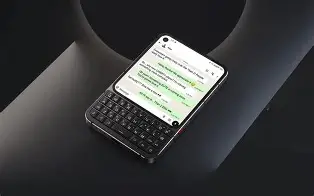
The software experience is mostly clean, with a few Unihertz-specific tweaks that I found useful: programmable keys, landscape-optimized home screen options, and useful toggles for one-handed landscape typing. On the flip side, I noticed some preinstalled apps I never used and a handful of system notifications related to vendor services. These were minor annoyances and easily managed, but if you prefer a perfectly stock Android experience, expect a little cleanup on first boot.
Find top-rated Laptops & Computers products at great prices.
Browse Now →Camera and audio: pragmatic, not premium
I was pleasantly surprised that the main camera produces solid daytime shots with good color rendering for casual photos. In lower light, the results become softer and noisier compared with flagship devices, which is an honest trade-off for this class of phone. If cameras are a top priority for you, this will feel like a compromise: serviceable for snapshots and video calls, not an all-in-one camera replacement.
Speakers on the Titan 2 are louder and more balanced than I expected. I used the phone for hands-free calls and occasional video playback, and the clarity at medium volumes was good. At maximum volume the speaker distorts slightly, but it’s useful for podcasts or navigation prompts when you don’t have earbuds handy.
Durability and day-to-day resilience
I carried this phone through rain, commutes, and a few drops. The Titan 2 handled the rougher edges of my life better than a slim glass sandwich flagship would. I did notice that dirt tends to collect in the textured creases and around the physical buttons, so I clean it more often than other phones. Still, the device kept working: no cracked screen, no button failures, and no significant cosmetic wear after months of typical urban use.
Battery and charging behavior
After testing the Titan 2 for extended real-world usage, battery life proved to be one of its strong suits for moderate users. My day-to-day routine — email, messaging, calls, a bit of navigation, and occasional streaming — usually ended with a comfortable reserve of power. Fast charging works and brought the phone back to useful levels in acceptable time, though charging times are not record-breaking compared to the best fast-charge systems. If you prioritize full-day reliability over ultra-fast top-ups, the Titan 2 makes a compelling case.
Things I appreciated (specific)
- Landscape typing ergonomics: I genuinely found myself typing faster and with fewer errors after a short adjustment period.
- Solid build: the weight and textured sides make it feel like it’s built for real use, not just aesthetic minimalism.
- Programmable hardware key: I mapped it to quick launch my note app — a small change that saved me time every day.
- Battery longevity in typical use: a real confidence boost when traveling without frequent access to chargers.
- Clear, loud speaker for calls and podcasts — helpful during walks or in taxis.
Disappointments and real drawbacks (specific)
- Bulk and pocketability: I underestimated how often the size would change how I dress and carry a phone.
- Camera limitations in low light: photos get noisy and lack detail compared with modern flagships.
- App UI quirks in landscape mode: a few essential apps don't play nicely horizontally, requiring extra scrolling or switching orientations.
- Occasional performance stutters under heavy editing loads — not ideal if you do frequent high-resolution media work.
- More frequent cleaning needed around buttons and textured edges due to dirt accumulation.
Pros & Cons
- Pros:
- Excellent landscape typing ergonomics and productivity focus
- Robust build and confident handling
- Very usable battery life for moderate users
- Programmable keys and useful landscape software tweaks
- Good speaker volume and call clarity
- Cons:
- Large footprint — not pocket-friendly for everyone
- Camera and low-light photography are average
- Some apps and interfaces don’t adapt well to landscape-first layout
- Not the fastest device for heavy media editing
- Requires more maintenance to keep clean
Quick comparison: Titan 2 vs Typical Flagship
| Feature | Unihertz Titan 2 (my experience) | Typical Flagship Phone |
|---|---|---|
| Design focus | Landscape-first, physical ergonomics, rugged feel | Thin, sleek, portrait-focused, premium materials |
| Typing | Superior for long-form thumb typing in landscape | Superior for single-handed portrait use and on-screen keyboards |
| Camera | Good for daylight snaps, average in low light | Often superior across all lighting conditions |
| Battery | Very reliable for moderate use — consistent full-day life | Varies — some flagships have exceptional fast-charging and endurance |
| Durability | Built to handle drops and rough handling better than average | Premium but often more fragile without cases |
| Portability | Less pocket-friendly; heavier | More pocketable; lighter |
| Price vs Value (my use) | High value for productivity-focused users | High value for camera/performance-focused users |
Buying guide: Who should consider the Titan 2?
In my experience, the Titan 2 shines for a specific kind of user. Below are the main questions I asked myself before buying, and how I would advise you to think about them.
Do you type a lot on your phone?
If you write long emails, manage chats, or draft notes frequently, the Titan 2’s landscape ergonomics are a real productivity advantage. I went from occasional replies to comfortably composing multi-paragraph messages on the go. If most of your interaction is short-form social media or single-thumb navigation, that advantage is much smaller.
Is durability and a confident grip important?
I found the Titan 2 reassuring when I’m on the move. If you work outdoors, travel a lot, or tend to be rougher with devices, the build quality reduces anxiety. If you keep a phone in a protective case and prioritize minimalism, you might prefer a thinner device.
Discover deals on Laptops & Computers — updated daily.
Browse Now →How important is the camera?
I use my camera for quick snaps and notes, and the Titan 2 handled that well in daylight. For serious photography, flagships still win. If your phone doubles as your main camera for low-light or wide-angle work, consider that a potential compromise.
Will the size fit your daily carry?
Mine required a small lifestyle change — switching to slightly larger pockets or using a backpack more regularly. If you wear skinny jeans every day, try holding a friend’s or demo unit before buying to see how comfortable it feels in your usual pocket or bag.
What to check at the store or on arrival
- Try typing in landscape for at least five minutes to see how natural it feels for you.
- Open the apps you rely on and test how they render in landscape mode.
- Check the programmable key behavior and map it to something useful immediately.
- Test speaker and microphone quality for calls in a noisy environment if you frequently take calls on the go.
- Inspect button clicks and the textured grip; some units may have slight variance in finish and feel.
Accessories and practical tips from my months of use
I bought a slim holster and a reinforced case early on. The holster made it much easier to carry the Titan 2 comfortably, and the case reduced dirt buildup around the buttons. I also recommend a screen protector — I found one that fits the display curvature and keeps micro-scratches at bay.
Software-wise, I disabled a couple of preinstalled apps and moved to a minimal home screen layout to reduce accidental taps in landscape. I also mapped the programmable key to toggle dark mode for quick late-night reading. Small tweaks like these made the experience far more personalized and pleasant.
Conclusion: is it worth buying?
After several months with the Titan 2, I can say confidently that this phone is for people who want a productive, rugged, landscape-oriented smartphone experience. In my experience, it transformed how I handle on-the-go writing, improved my confidence in carrying a device that tolerates rougher use, and gave me battery life that matches my travel habits. What I found was a device that deliberately trades pocket-friendliness and camera supremacy for ergonomics, durability, and a different kind of daily productivity.
If you’re someone who types often on a phone, likes a physical-feeling device, and wants a phone that won’t flinch at everyday knocks, the Titan 2 is an excellent, well-defined choice. If you prioritize the absolute best camera, the slimmest form factor, or top-tier gaming performance, you’ll likely miss what mainstream flagships offer. For me, the Titan 2 scratched a niche itch — and months later I still reach for it when I know I’ll be doing serious typing away from my desk.